
The systems map.
Stakeholders, flows, dependencies and the points where action matters, drawn for your asset. Interactive for your team, printable for your board.
Where to begin
The Systems Diagnostic is where most engagements begin. We map your hotel, resort or destination as one system, make the dependencies between its parts visible and rank the three to five interventions that matter most by impact, cost and feasibility. You hold the map and the list, whether or not we work together afterwards.
Begin a conversation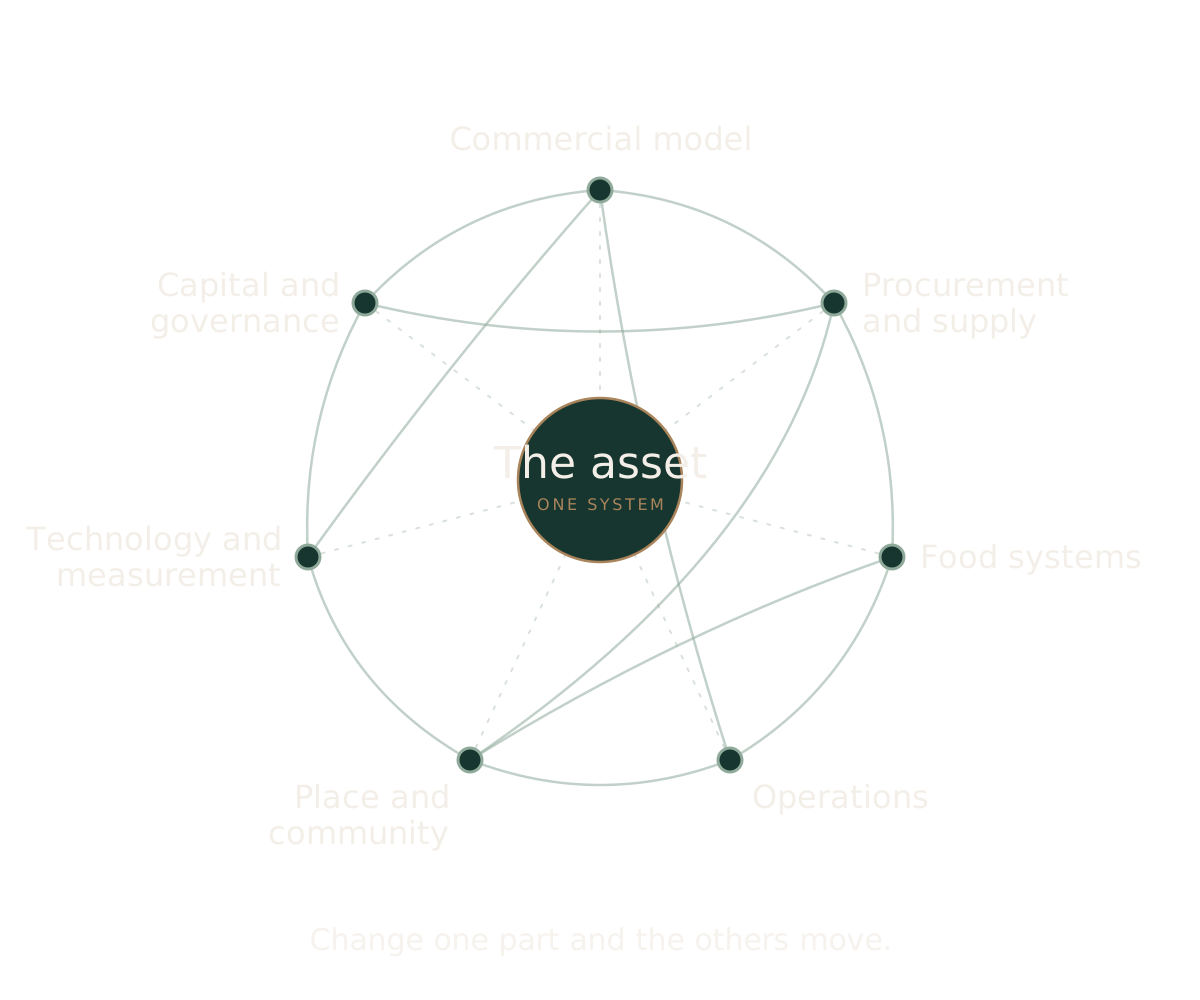
What you hold
Stakeholders, flows, dependencies and the points where action matters, drawn for your asset. Interactive for your team, printable for your board.
Three to five interventions ranked by impact, cost and feasibility, each with an owner and a first step.
What to do first, what waits, and what to measure from day one so the effect can be shown later.
How it runs
Brief.
The decision in front of you, the documents you already have, and who we need to speak to.
Listen.
Interviews across commercial, operations, procurement, food and beverage and reporting, and time on site. The first map is drawn.
Test.
The map worked through with your team until it is right. Interventions ranked.
Decide.
The roadmap, and a working session with the people who will carry it.
Who it suits
It suits.
Owners and asset managers ahead of a repositioning or a capital decision; developers before the brief is fixed; operators whose commitments have stalled between departments; destination bodies before a plan or an investment.
Less so.
A single-site energy audit; a certification pathway; a reporting template. If that is what you need, we will say so in the first call and point you to who does it well.
Investment
The Diagnostic is priced to the size of the asset or destination and the access it needs. Andrew gives you the figure in the first conversation, not in a proposal you have to wait for.
Where it leads
The Diagnostic is the first of the five stages every engagement runs on. What follows, if anything, is scoped from the map: a designed transition, embedded delivery, the evidence to disclose, and a team that owns it.
Before you ask
An audit counts. The Diagnostic connects. It maps how commercial, procurement, operating, place and measurement decisions depend on each other and tells you where acting first moves the most.
The decision-maker, the general manager or asset manager, procurement, food and beverage, and whoever owns reporting. Typically six to ten interviews and a day on site.
Yes. The Diagnostic shows where the strategy holds, where it stalls between departments, and which three to five moves would carry it into operations.
Where to begin
Twenty minutes with Andrew about the decision in front of you. If the Diagnostic is not the right first step, he will say what is.
Begin a conversation