
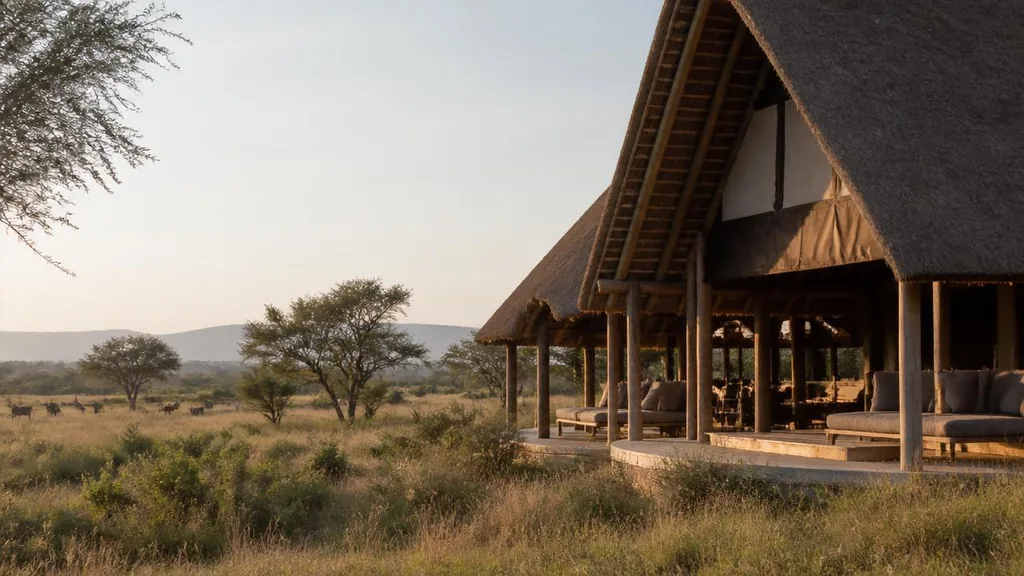
Zimbabwe · Regenerative estate strategy
A regenerative estate, from vision to delivery
The family had the land, the ambition and a masterplan that had stopped moving. What was missing was a sequence: what to build, in what order, and who benefits at each step.
- Scope
- Integrated execution framework across land use, community enterprise and hospitality
- Role
- Embedded delivery lead alongside the family and estate management
- Setting
- Family-held estate, Zimbabwe
- Evidence base
- Comparator research across eight regenerative properties in the region
The Situation
A family-held estate with a regenerative ambition and a stalled masterplan.
What Enzyme Did
An integrated execution framework linking land use, community enterprise and hospitality operations, informed by comparator research across eight regenerative properties in the region.
What Made It Hard
- A masterplan that treated land, community and hospitality as three separate workstreams, which is why it stalled.
- Patient family capital — the sequence had to be affordable in stages, not funded in one round.
- Community benefit needed to be structural from the first hectare, not a programme bolted on after opening.
- Regional comparators were scarce and rarely documented, so the evidence had to be gathered first-hand.
How the Work Ran
Diagnosed the stall
Traced why the masterplan had stopped: the land programme, the community enterprise plan and the hospitality concept each assumed the others would move first.
Researched the field
Studied eight regenerative properties across the region to establish what actually works at this scale, what the real cost curves look like, and where comparable estates lost momentum.
Linked the three systems
Built one execution framework in which land-use restoration, community enterprise and hospitality operations feed each other — restored land supplies the kitchen, community enterprise supplies the guest experience.
Sequenced and costed it
Turned the framework into staged phases, each with its own cost, dependency and decision gate, so the family can commit one phase at a time.
Designed the benefit in
Set community participation and revenue share into the structure of the first phase, where it shapes every phase that follows.
What Changed
A sequenced, costed delivery programme with community benefit designed in from the first hectare.
A stalled masterplan became a delivery programme
Phases, costs and dependencies are explicit, so the estate can move without re-litigating the vision at every meeting.
Community benefit designed in from the first hectare
Participation is structural rather than philanthropic, which is what makes it durable through ownership and management change.
Capital committed in stages
Each phase stands on its own, so the family is never asked to fund the whole ambition at once.
Decisions grounded in regional evidence
Eight documented comparators replaced assumption with observed cost, yield and timeline data.
Related thinking
Next step
Ready to start your project?
Book a conversation to discuss how systems integration can create measurable value for your property or destination.
20 minutes with Andrew. No pitch deck.